Out-of-home advertising can involve a lot of back-and-forth: advertisers need to find the right placement, while space owners need a clear way to present inventory and manage requests. AdItHere brings both sides into one marketplace for billboards, LED and LCD displays, and other OOH placements.
I founded the product and led its full-stack development from product definition through the MVP. The work connected public marketplace discovery with the operational flows hosts and advertisers need after they find a fit.
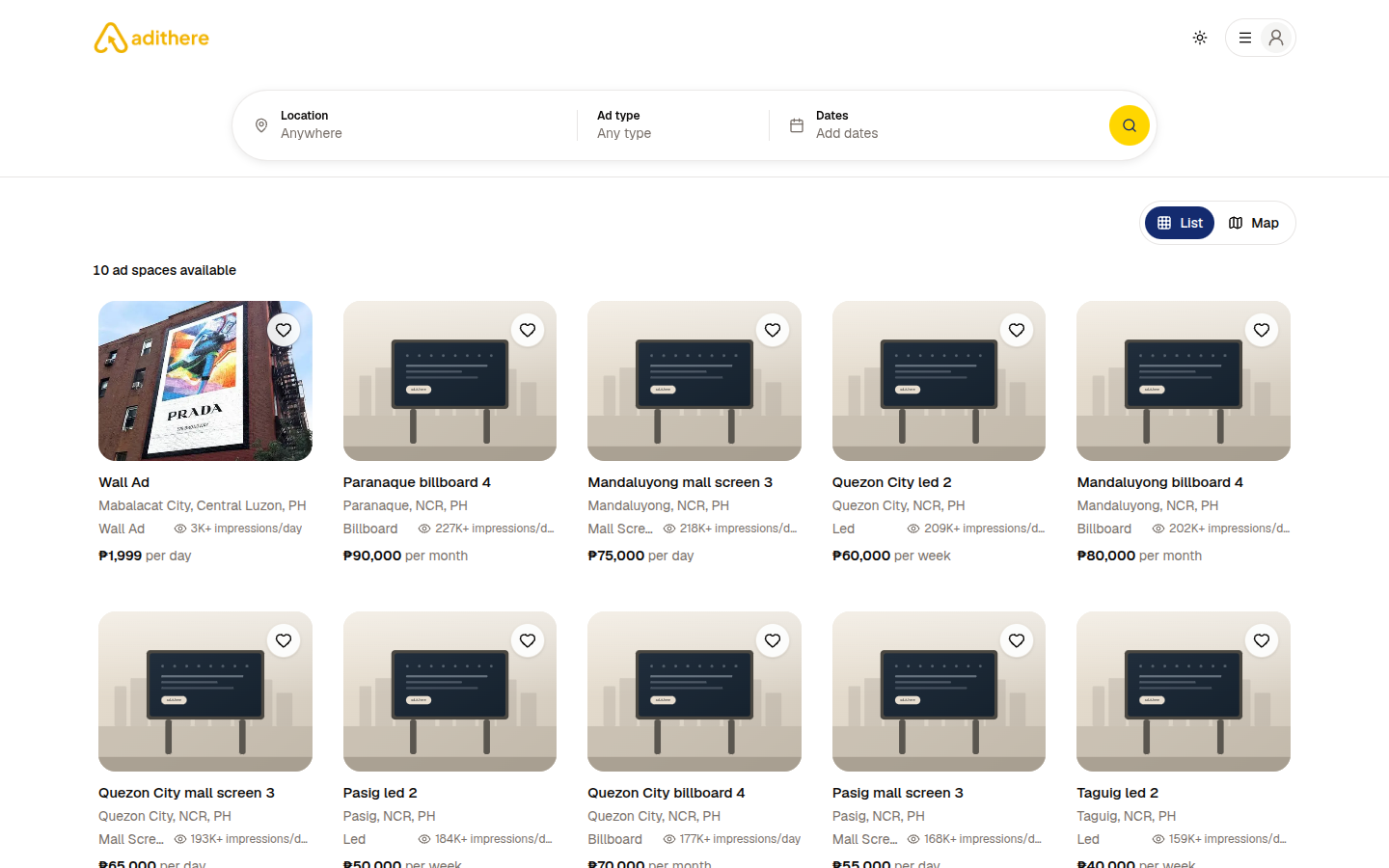
One marketplace, two workspaces
The product needed to serve two groups with different jobs. Advertisers browse placements and manage booking requests. Hosts publish ad spaces, set availability and pricing, and review incoming requests.
I shaped the experience around those distinct workflows while keeping them in one product: an advertiser can begin by exploring inventory, and a host can manage listings and bookings from the host side of the same account experience.
From discovery to campaign delivery
The booking flow needed to carry a request beyond a simple reservation. A confirmed booking leads into campaign setup, where creative files can be submitted, reviewed by the host, and prepared for deployment. That gives both parties a shared sequence of steps and makes campaign work visible after the booking is made.
The flow also accounts for digital inventory, where campaigns may need to support rotating creative rather than a single static placement.
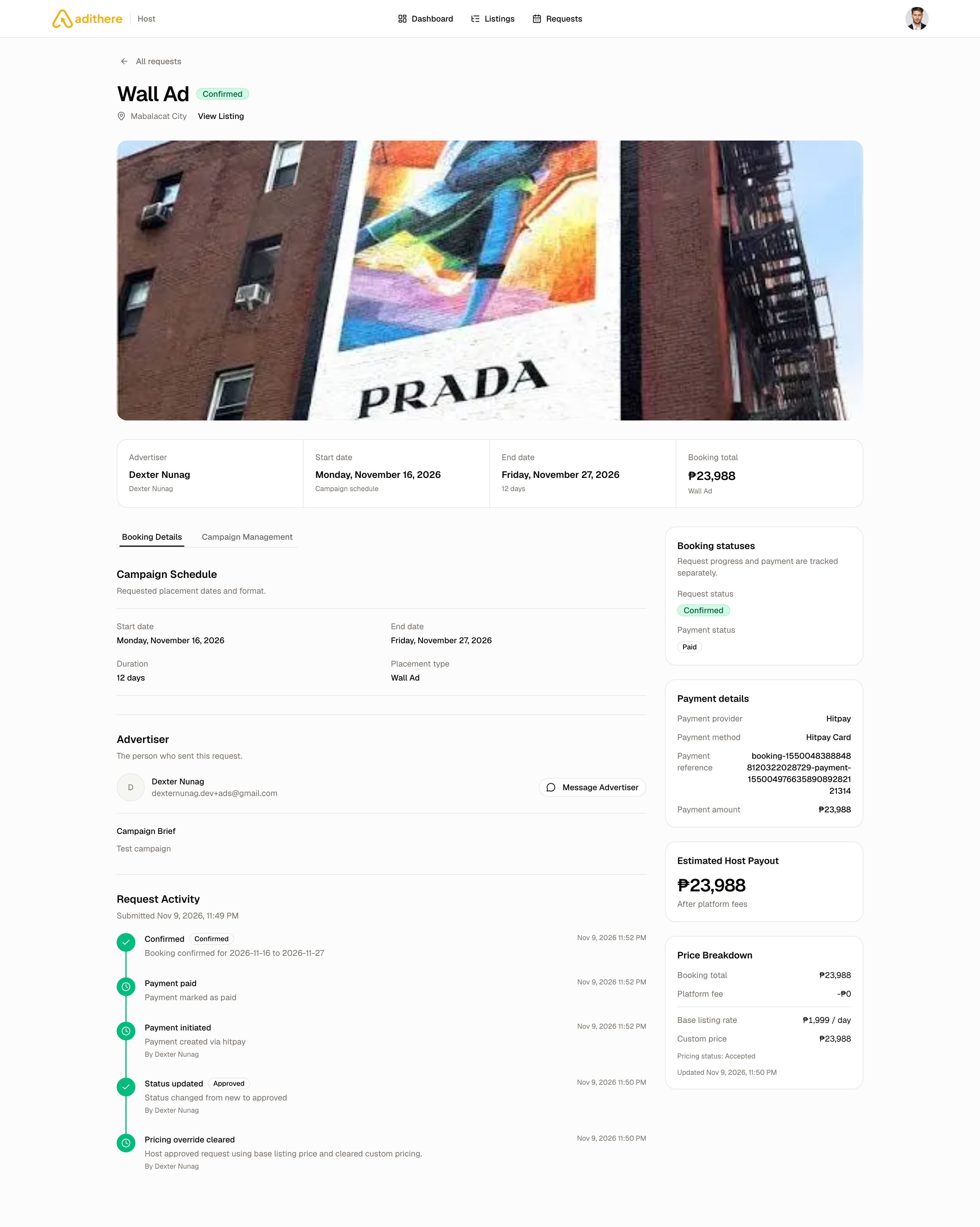
Payments and plans with clear boundaries
The MVP supports a manual bank-transfer path with receipt submission and admin verification. HitPay checkout and subscription flows were being exercised in sandbox, so I kept that status distinct from a production payment launch.
The host plan model includes Free, Standard, Premium, and Enterprise tiers. Plan rules provide a way to control listing limits and paid host features as the marketplace grows, without making subscription logic the center of the advertiser booking experience.
A practical full-stack foundation
I built the application with Next.js and TypeScript on the frontend and AdonisJS on the backend, with PostgreSQL for core product data. Redis and Meilisearch support the application's supporting data and search needs. Docker, AWS Lightsail, and Coolify form the containerized staging and deployment setup.
The project also surfaced an infrastructure constraint early: builds could put pressure on a small Lightsail instance. I planned to move build work off the application host before launch, keeping the runtime environment leaner and deployment work more predictable.
MVP outcome
The MVP feature set is complete and prepared for user acceptance testing and early host onboarding. It brings host listing management, advertiser booking, payment handling, and campaign follow-through into one product foundation.
There are no verified marketplace or revenue metrics to report yet, so the result is best measured by the working product scope and readiness for validation with hosts and advertisers.
What this project brought together
AdItHere is a marketplace problem expressed through connected product workflows: make supply legible, help buyers place requests, and give both sides a path from booking to campaign delivery. Building the MVP meant balancing those user journeys with payment readiness, plan rules, and the limits of a lean deployment setup.